
Java Program to Implement multiple inheritance
In this example, we will learn to implement multiple inheritance in Java.
To understand this example, you should have the knowledge of the following Java programming topics:
When the child class extends from more than one superclass, it is known as multiple inheritance. However, Java does not support multiple inheritance.
To achieve multiple inheritance in Java, we must use the interface.
Example: Multiple Inheritance in Java
interface Backend {

  // abstract class
  public void connectServer();
}

class Frontend {

  public void responsive(String str) {
    System.out.println(str + " can also be used as frontend.");
  }
}

// Language extends Frontend class
// Language implements Backend interface
class Language extends Frontend implements Backend {

  String language = "Java";

  // implement method of interface
  public void connectServer() {
    System.out.println(language + " can be used as backend language.");
  }

  public static void main(String[] args) {

    // create object of Language class
    Language java = new Language();

    java.connectServer();

    // call the inherited method of Frontend class
    java.responsive(java.language);
  }

}
Output
Java can be used as backend language.
Java can also be used as frontend.
In the above example, we have created an interface named Backend and a class named Frontend. The class Language extends the Frontend class and implements the Backend interface.
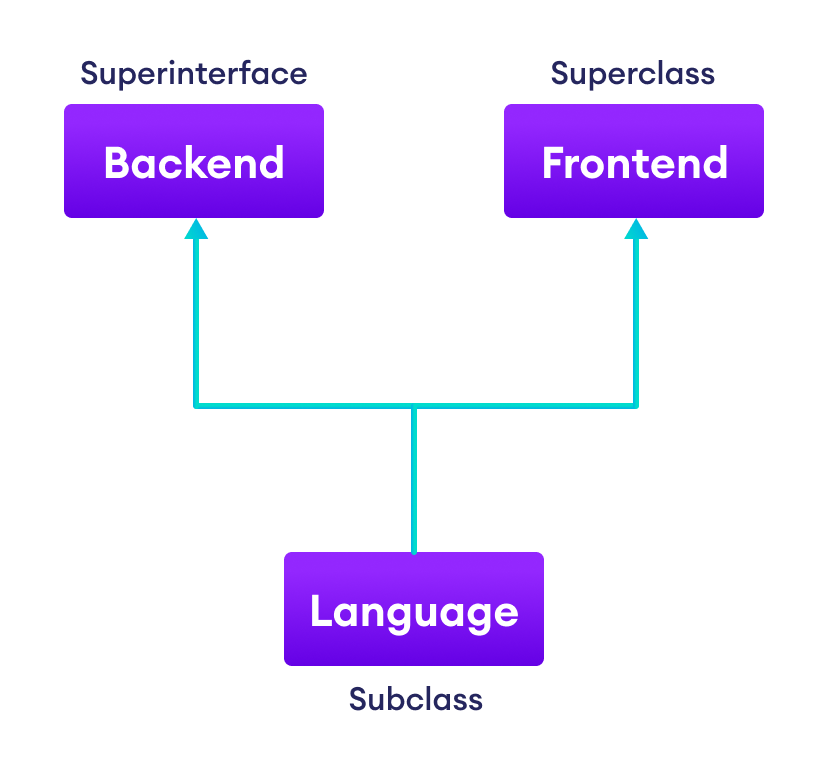
Here, the Language class is inheriting the property of both Backend and Frontend. Hence, we can say it is an example of multiple inheritance.
Also Read:
Share on:


Did you find this article helpful?